Access is great… but what about experience?
At Bascule, we have always believed that access shouldn’t be about compliance alone. After all, box-ticking is usually the easy bit.
Don’t get me wrong, compliance standards are incredibly important, but they should always be followed by a considered, planned approach to how people with disabilities actually experience something once they've accessed it.
For example, I can’t tell you how many times I have been told an event is wheelchair accessible, only to find that the ‘access’ is limited to entering the building. Often, once I am inside, I have often come across internal steps, untrained staff or a lack of accessible toilets. In short- yes, you can enter, but you won’t necessarily experience what’s inside like most people do. But you will be in!
Hotel rooms are another good example. After checking in and entering what’s been described as an accessible room, I've often found that the furniture layout blocks half the room I’ve just paid a lot of money for. (In one incident, I even came across what had been described as an “accessible wet room” that actually had a step! More about that in this blog.)
In short, consideration for accessibility should never stop at allowing someone to simply enter, it should also consider a person’s experience once they are in.
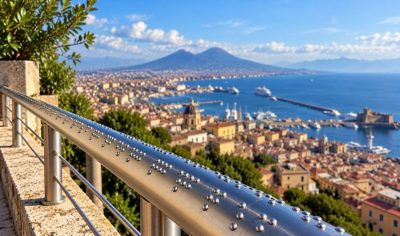
Which is why, when I recently came across a picture of an installation in Naples, it struck me as a wonderful example of consideration for experience after access.
Castel Sant’Elmo is renowned for its extraordinary panoramic view across the city, towards Mount Vesuvius and the surrounding coastline.
Whilst Castel Sant’Elmo and the viewpoint is accessible, those who are visually impaired will naturally have a much more limited experience. Which is why artist Paolo Puddu came up with the idea of adding Braille passages describing the landscape's beauty, through poetic interpretations of the view, along the 92-foot handrail.
What I found striking is that a simple, relatively low-cost change to a beautiful place makes it immediately more appealing and accessible for so many more people. Puddu applied a little thought and significantly enhanced the experience for sight-impaired visitors.
It also showed me that we can be creative with access, explore new ways to enhance the experiences of people with disabilities, and not have limitations on what we believe access to be.
Organisations can also learn a lot from this by considering what they want their staff, customers, clients, or visitors to experience before asking themselves: are there any groups that will miss out on what we offer? If so -who are they, and how can their experience be enhanced?
This will naturally have a positive impact on your organisation. In addition to a better experience for the individual, you will have a better-served customer, a happier staff member, and be better-catered for visitors.
Like Pablo Puddu, we should take time to consider small changes that let others fully engage with and experience the landscape of our offerings, as these solutions are often less complicated or costly than we think.
Accessibility isn’t just about opening a door, it’s about what happens once someone comes through it. And if we want to improve ourselves as businesses, service providers, or employers, a little thought about a person’s experience will go a long way.
CHRIS JAY- MANAGING DIRECTOR, BASCULE DISABILITY TRAINING